http://www.ncbi.nlm.nih.gov/pubmed/20463368
http://stm.sciencemag.org/search?site_area=scitransmed&y=0&fulltext=evengelos%20michelakis&x=0&submit=yes
Vision Is All About Change
In the past minute alone, your eyes made as many as 240 quick movements called “saccades” (French for “jolts”). In your waking hours today, you will very likely make some 200,000 of them, give or take a few thousand. When you sleep, your eyes keep moving — though in different ways and at varying speeds, depending on the stage of sleep.
.........what may be most surprising is that large eye motions and miniature eye jolts help us see the world in similar ways — largely at the same time.
more: http://www.nytimes.com/2013/05/19/opinion/sunday/vision-is-all-about-change.html?ref=opinion&_r=0

http://www.sciencebob.com/images/waveillusion.jpg
Enhanced Motion Detection in Autism May Point to Underlying Cause of the Disorder
Children with autism see simple movement twice as quickly as other children their age.........more http://www.rochester.edu/news/show.php?id=6332
See-through brains clarify connections
Technique to make tissue transparent offers three-dimensional view of neural networks.
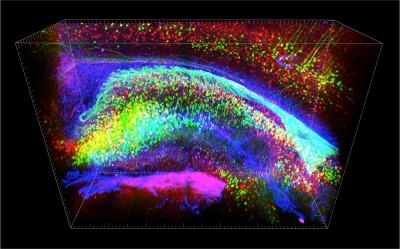
http://www.nature.com/news/see-through-brains-clarify-connections-1.12768
Eyes: a Window to the Diagnosis
Researchers use characteristic differences in eye movements to identify patients with deficits in neurological function.
